

Description
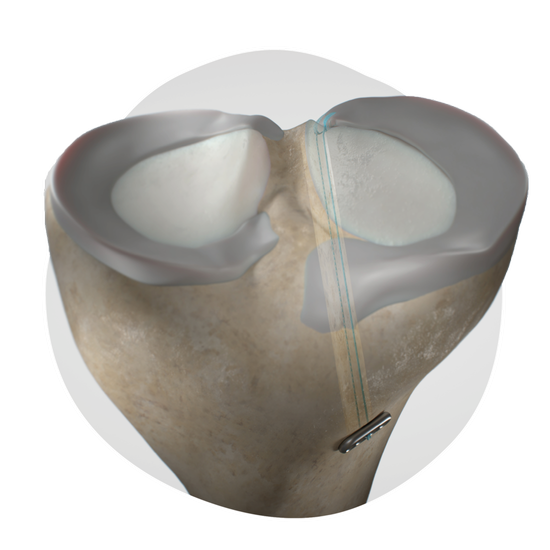
Why repair a meniscal root tear?
Left untreated, meniscal root tears have been reported to result in altered joint biomechanics, accelerated articular cartilage degeneration and an increased risk of developing osteoarthritis (OA) in later life.1
Furthermore, the use of meniscectomy to treat meniscal root avulsions can lead to significant joint space narrowing within five years.*2
Compared to meniscectomy and/or non-surgical treatment, meniscal root tear repair has been shown in systematic literature reviews and meta analyses to result in:
- Reduced risk of OA: Meta-analyses of medial meniscus posterior root (MMPR) repair have shown that repair leads to significantly lower rates of radiographic OA at 5-year follow-up compared to meniscectomy,**3 and the lowest rate of OA progression (53%) compared to non-operative management (95%) and meniscectomy (99%)4
- Lower risk of total knee replacement: MMPRs treated with surgical repair were shown to result in less cartilage degeneration and a 77% reduction in the risk of total knee arthroplasty (TKA).***5 In the meta-analysis of 10-year outcomes, MMPR repair resulted in the lowest rate of progression to TKA (34%) when compared to non-operative management (46%) and meniscectomy (52%)4
- Improved patient-reported outcome scores: When analysing the mean differences between pre- and post-operative scores, a meta-analysis showed improvements in post-operative Lysholm, HSS, IKDC, KOOS and VAS scores6